Everyone has difficult days.
You may feel exhausted after a demanding week, overwhelmed by responsibilities, or simply need time to recover.
But what happens when the exhaustion does not go away?
What if the things you normally enjoy no longer feel enjoyable? What if you are struggling to get out of bed, concentrating at work, connecting with others, or finding motivation?
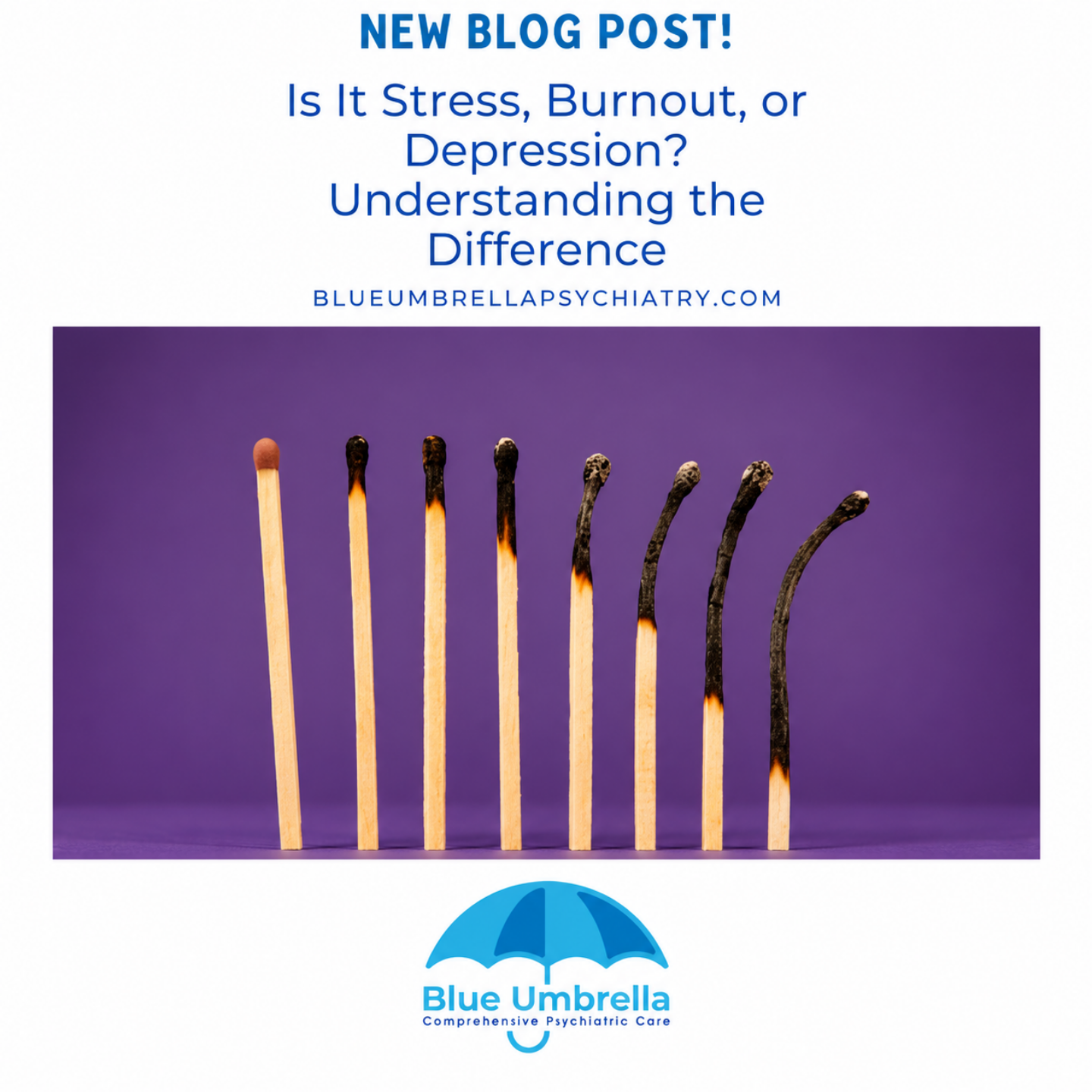
Stress, burnout, and depression can sometimes look similar, but they are not the same.
Understanding the differences can help you recognize when it may be time to seek additional support.

What Is Stress?
Stress is the body's response to challenging or demanding circumstances.
Work deadlines, family responsibilities, financial concerns, relationship difficulties, major life changes, and other situations can all create stress.
Stress may cause:
- Irritability
- Muscle tension
- Difficulty concentrating
- Changes in sleep
- Feeling overwhelmed
- Headaches
- Restlessness
- Feeling mentally exhausted
Stress often improves when the situation causing it changes or when you have an opportunity to rest and recover.
However, ongoing stress can contribute to emotional and physical exhaustion.
What Is Burnout?
Burnout is often associated with prolonged or chronic stress, particularly related to work, caregiving, or other ongoing responsibilities.
Someone experiencing burnout may feel:
- Emotionally exhausted
- Detached or disconnected
- Less motivated
- Frustrated or irritable
- Less productive
- Overwhelmed by responsibilities
- Like they have nothing left to give
Burnout can make everyday responsibilities feel much harder.
Unlike a particularly stressful week, burnout tends to develop over time when there is not enough opportunity for recovery.

What Is Depression?
Depression is more than simply feeling sad or having a difficult week.
Depression can affect mood, thoughts, motivation, sleep, appetite, relationships, concentration, and the ability to enjoy everyday life.
Symptoms may include:
- Persistent sadness or emptiness
- Loss of interest or pleasure
- Low energy
- Changes in sleep
- Changes in appetite
- Difficulty concentrating
- Feelings of guilt or worthlessness
- Irritability
- Withdrawal from others
- Feelings of hopelessness
Depression can occur even when there is no obvious external reason for someone to feel this way.
Stress, Burnout, or Depression?
Sometimes the differences can be difficult to recognize.
Consider the following:
Stress:
“I have too much on my plate.”
Burnout:
“I have been giving everything I have, and I have nothing left.”
Depression:
“I don't feel like myself anymore, and even the things I used to enjoy don't feel meaningful.”
These experiences can also overlap.
Someone can experience chronic stress that contributes to burnout while also developing symptoms of depression or anxiety.
Why Depression Can Be Overlooked
Depression does not always look like sadness.
Some people may primarily experience:
- Irritability
- Anger
- Fatigue
- Difficulty concentrating
- Sleeping too much
- Sleeping too little
- Changes in appetite
- Social withdrawal
- Loss of motivation
This can make depression particularly difficult to recognize in ourselves or someone we care about.
Questions to Ask Yourself
If you have been feeling different recently, consider:
- Have I lost interest in things I normally enjoy?
- Am I constantly exhausted?
- Has my sleep changed?
- Have I been withdrawing from people?
- Am I struggling to concentrate?
- Do I feel hopeless or unusually negative?
- Have these changes continued even after getting some rest?
- Is this affecting my work, school, relationships, or daily responsibilities?
Your answers may help you recognize whether your experience deserves additional attention..
National Depression Screening Day
October includes Depression Awareness Month, and National Depression Screening Day is October 8, 2026.
Awareness and screening can encourage people to recognize symptoms earlier and start conversations about mental health.
You do not need to wait until symptoms become overwhelming before asking for help.
When to Seek Additional Support
If low mood, exhaustion, anxiety, loss of interest, or other symptoms are affecting your ability to function or enjoy your life, consider talking with a mental health professional.
A psychiatric evaluation can help determine what may be contributing to your symptoms and whether treatment may be appropriate.
Treatment may include therapy, medication management, lifestyle changes, or other evidence-based approaches based on your individual needs.
At Blue Umbrella Psychiatry, we provide personalized psychiatric care designed to meet each patient's unique needs. Our comprehensive services include psychiatric evaluations, medication management, therapy, Transcranial Magnetic Stimulation (TMS), and Ketamine treatment when clinically appropriate. We partner with our patients to create individualized treatment plans that support lasting mental wellness.
Take Action
Feeling stressed does not automatically mean you are experiencing depression.
But if you have been feeling unlike yourself for weeks, losing interest in things you once enjoyed, withdrawing from others, or struggling to function, it may be worth having a conversation with a professional.
You do not have to figure out the difference between stress, burnout, and depression on your own.
Understanding what you are experiencing is the first step toward finding the right support.