Depression is a serious mental health condition that affects millions of adults, and for many, traditional treatments like therapy and antidepressant medications may not provide the relief they need. When depression becomes resistant to treatment, it can leave individuals feeling hopeless and isolated. However, Ketamine therapy is a groundbreaking treatment option that offers new hope for those struggling with treatment-resistant depression.
At Blue Umbrella Psychiatry, we are proud to offer Ketamine therapy at our Breakthrough Center, providing a promising alternative for adults who have not found success with traditional treatment options. Here’s how Ketamine therapy works and why it might be the right choice for you if you’re struggling with severe depression.
What is Ketamine Therapy?
Ketamine has been used for decades as an anesthetic, but recent research has revealed its potential as a treatment for depression, particularly in individuals with treatment-resistant depression (TRD). TRD refers to cases where depression doesn’t improve after trying multiple medications and therapies. Ketamine offers a different approach, working in a way that traditional antidepressants do not.
Unlike standard antidepressants that typically focus on balancing chemicals like serotonin and norepinephrine in the brain, Ketamine works on the brain’s glutamate system, which is involved in mood regulation and neuroplasticity (the brain's ability to form new neural connections). By stimulating this system, Ketamine has been shown to rapidly reduce depressive symptoms, sometimes within hours, offering a fast-acting and highly effective solution for many patients.
How Does Ketamine Work for Treatment-Resistant Depression?
Ketamine works by inducing a state of neuroplasticity, which means it helps your brain "reset" by promoting new connections between nerve cells. This process is thought to repair the disrupted neural circuits that may be contributing to depression, providing relief from the emotional numbness and hopelessness that can come with severe depression.
Most traditional antidepressants can take weeks or even months to show noticeable effects, but Ketamine provides rapid relief, often within hours to days after treatment. This is why it’s particularly beneficial for those who have not responded to other forms of treatment. The speed and effectiveness of Ketamine therapy can help individuals feel better quickly, allowing them to regain a sense of hope and begin rebuilding their lives.
What to Expect During Ketamine Therapy at Our Breakthrough Center
At Blue Umbrella Psychiatry, we offer Ketamine therapy in a safe, monitored setting at our Breakthrough Center. Each session is personalized to fit your unique needs, and the treatment is administered by a trained professional who will monitor your progress throughout the session.
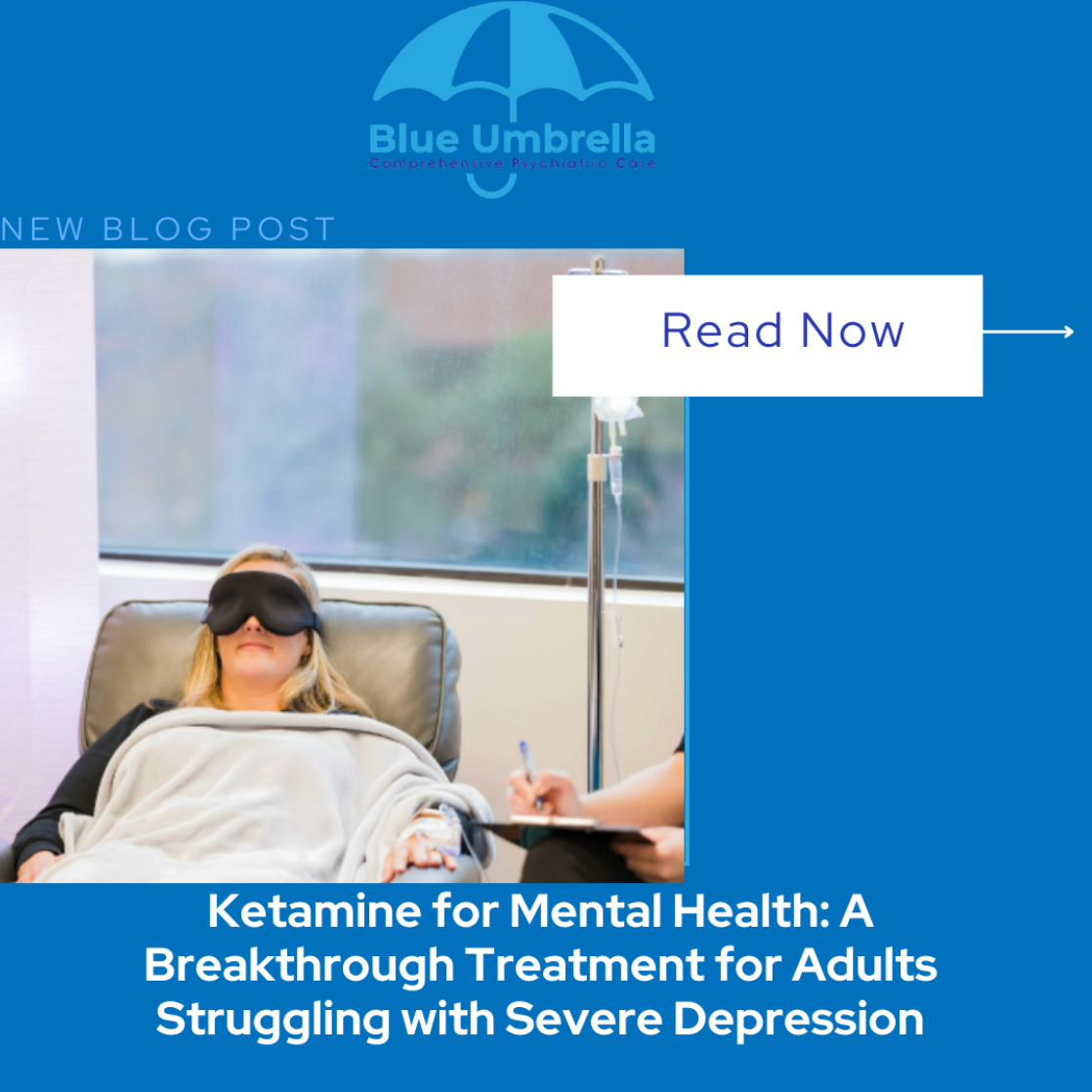
The treatment typically involves being in our office for approximately two hours. Ketamine is administered via an IV infusion, and patients are encouraged to relax and let the treatment take effect during this time. Since Ketamine may cause temporary disorientation or drowsiness, you will not be able to drive yourself home after the session. It is important to arrange for a trusted friend or family member to drive you home afterward.
Many people begin to notice an improvement in their mood after just a few sessions. However, the number of sessions required can vary depending on individual needs, with some people achieving long-term relief with just a few treatments.
Self-Pay Option: Making Ketamine Therapy Accessible
Currently, Ketamine therapy is not covered by most insurance plans, which can make it seem inaccessible to some individuals. At Blue Umbrella Psychiatry, we understand the importance of providing innovative treatments, and we offer Ketamine therapy on a self-pay basis. This allows us to provide our patients with access to this cutting-edge treatment while ensuring the highest quality of care.
Although insurance coverage is not yet available for Ketamine, the results speak for themselves. Many patients who’ve struggled with depression for years and tried numerous treatments without success have found life-changing relief with Ketamine. We’re committed to making this breakthrough therapy available to those who need it most.
Find Hope with Ketamine Therapy
If you’ve been struggling with severe depression that hasn’t improved with traditional treatments, Ketamine therapy might be the solution you’ve been searching for. Our Breakthrough Center is dedicated to offering innovative treatments to help you reclaim your life and well-being.
Our team at Blue Umbrella Psychiatry will work with you to determine if Ketamine is the right choice for you. During your new patient consultation, we’ll assess your needs, explain the benefits of Ketamine therapy, and create a treatment plan that’s customized to fit your unique situation.
Call us today at 954-341-5215 to schedule a consultation and find out how Ketamine therapy can help you break free from the grip of treatment-resistant depression.