Not all wounds are visible.
Some experiences stay stored in the body — surfacing as anxiety, triggers, panic, emotional numbness, or patterns that feel difficult to break. You may understand logically that something is “in the past,” yet your nervous system still reacts as if it’s happening now.
This is where therapy — and specifically EMDR — can make a meaningful difference.
At
Blue Umbrella Psychiatry, we have six therapists with diverse specialties, availability, and insurance participation. Among them, we are proud to offer EMDR therapy for individuals seeking a focused, trauma-informed approach to healing.

What Is EMDR?
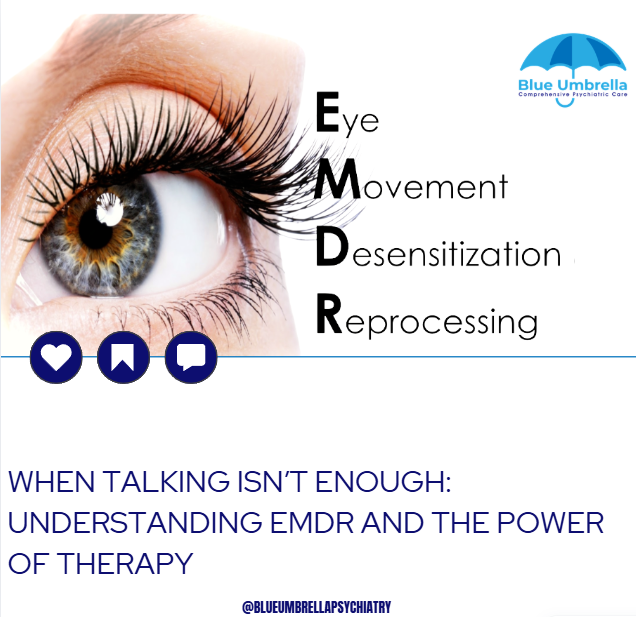
Eye Movement Desensitization and Reprocessing (EMDR) is an evidence-based psychotherapy originally developed to help individuals process trauma.
Unlike traditional talk therapy, EMDR does not require you to repeatedly retell painful memories in detail. Instead, it uses structured bilateral stimulation (such as guided eye movements) to help the brain reprocess distressing experiences so they no longer feel as emotionally charged.
Research shows EMDR can be effective for:
- Trauma and PTSD
- Anxiety and panic
- Childhood wounds
- Phobias
- Grief and loss
- Negative core beliefs (“I’m not good enough,” “I’m unsafe,” etc.)
EMDR works by helping the brain do what it was naturally designed to do — process and integrate experiences in a healthier way.
How EMDR Feels Different From Traditional Therapy

Traditional therapy often focuses on insight, coping skills, and behavioral change. EMDR goes a step deeper into how memories are stored in the nervous system.
Clients often report that after EMDR:
- Triggers feel less intense
- Distressing memories feel more distant
- Emotional reactions decrease
- Self-beliefs begin to shift
- The body feels calmer
It is not about erasing memories.
It is about reducing their emotional charge.
Therapy Is Not One-Size-Fits-All
While EMDR is powerful, it’s not the only path to healing.
At Blue Umbrella Psychiatry, our six therapists offer a range of approaches, including:
- Cognitive Behavioral Therapy (CBT)
- Trauma-informed therapy
- Anxiety and mood disorder treatment
- Supportive therapy
- Skills-based approaches
Some of our therapists accept insurance.
Some are private pay.
All offer different scheduling availability.
The most important factor in therapy success is fit — feeling safe, understood, and supported by your provider.
Investing in Trauma-Focused Work
Our EMDR therapist primarily operates on a self-pay basis. Many clients choose this route when they are looking for specialized trauma work or prefer greater privacy and flexibility in treatment.
We understand that cost is a consideration, and our team is transparent about fees, availability, and options during the consultation process.
Healing is deeply personal — and choosing the right therapeutic approach is part of that process.
What You Can Gain From Therapy
Therapy is not only for crisis.
It can help you:
- Understand patterns in relationships
- Improve emotional regulation
- Process unresolved trauma
- Build healthier coping strategies
- Strengthen self-esteem
- Feel more grounded and present
Sometimes growth begins simply by having a space that is yours — consistent, confidential, and focused entirely on your well-being.