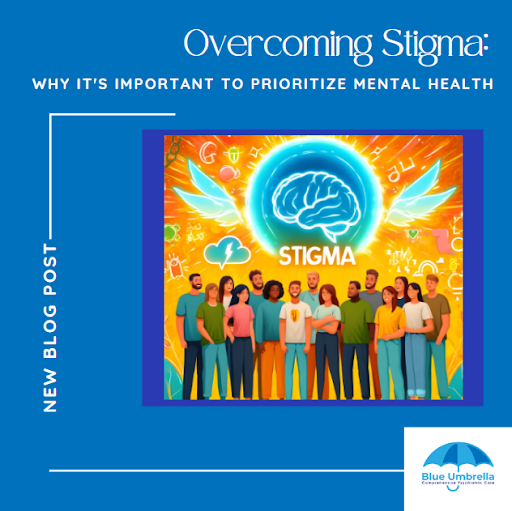
Mental health is a crucial aspect of our overall well-being, but despite the growing awareness, stigma around mental health care still exists. Many people hesitate to seek help because they fear being judged or misunderstood. This stigma can prevent individuals from accessing the care and support they need, which is why it’s essential to break down these barriers and prioritize mental health.
At Blue Umbrella Psychiatry, we are dedicated to creating a welcoming, non-judgmental space where everyone can receive the care they deserve. In this blog, we will explore common myths surrounding mental health care and provide insights into why it’s so important to overcome stigma.
1. Mental Health Struggles Are Common
One of the most significant myths about mental health is that people should be able to “snap out of it” or that it’s something only a small group of people experience. The truth is, mental health struggles are incredibly common. According to the National Alliance on Mental Illness (NAMI), 1 in 5 adults in the U.S. experiences mental illness each year. That means millions of people are dealing with conditions like depression, anxiety, and stress, and many don’t seek help due to the fear of being stigmatized.
If you’re struggling, you’re not alone—and it’s okay to seek support. Just like you would see a doctor for a physical ailment, it’s important to see a mental health professional when you need help with your emotional or psychological well-being.
2. Therapy and Medication Can Be Life-Changing
There’s still a misconception that therapy is only for those who are “really struggling” or that medication is a sign of weakness. In reality, both therapy and medication are powerful tools for managing mental health conditions. Therapy offers a safe space to explore your feelings, learn coping skills, and work through difficult emotions, while medication can help regulate brain chemistry and provide relief from symptoms.
At Blue Umbrella Psychiatry, we take a comprehensive approach, combining therapy, medication management, and alternative treatments like TMS and Spravato for patients who need them. Our goal is to provide individualized care to help you achieve lasting mental wellness.
3. Treatment-Resistant Depression: A Real Condition with Real Solutions
Another common myth is that depression is something that can always be treated with traditional methods like medication and talk therapy. While many people find relief through these methods, some individuals experience treatment-resistant depression. This condition occurs when standard treatments don’t provide relief from symptoms, leaving patients feeling hopeless.
However, treatment-resistant depression is not a dead end. There are alternative treatments available, including Spravato (esketamine) and TMS (Transcranial Magnetic Stimulation), which have been shown to be effective for patients who haven’t responded to traditional therapies. These treatments offer hope to individuals who have struggled for years without finding lasting relief.
4. Mental Health is Just as Important as Physical Health
One of the most harmful misconceptions about mental health is that it’s not as important as physical health. Mental health affects every aspect of your life, including relationships, work, and daily functioning. Neglecting mental health can lead to more serious physical health issues, such as chronic stress, heart disease, and weakened immune function.
Taking care of your mental health is just as important as taking care of your body. At Blue Umbrella Psychiatry, we emphasize a holistic approach to care, which involves not only treating the mind but also supporting physical well-being through lifestyle changes, self-care, and wellness strategies.
5. Breaking the Silence: Why Seeking Help Is a Sign of Strength
Seeking help for mental health challenges is not a sign of weakness—it’s a sign of strength. It takes courage to acknowledge when you’re struggling and to reach out for support. In fact, the sooner you seek help, the better your chances of recovery.
It’s important to create a culture where mental health care is viewed as a natural and necessary part of self-care, just like seeing a doctor for a physical illness. By breaking the stigma, we can encourage more people to seek help when they need it.
6. Personal Stories of Success
At Blue Umbrella Psychiatry, we’ve had the privilege of seeing many patients overcome their mental health challenges through therapy, medication, and innovative treatments. One patient who struggled with treatment-resistant depression found success through Spravato therapy, while another experienced significant relief from anxiety through regular therapy sessions and mindfulness practices. These stories are proof that there is hope, and seeking help can lead to profound improvements in quality of life.
Overcoming stigma is an ongoing journey, but it’s one that we must take together. By sharing our stories, educating others, and providing compassionate care, we can create a world where mental health is prioritized, and everyone feels safe seeking the support they need. If you or someone you know is struggling with mental health, don’t hesitate to reach