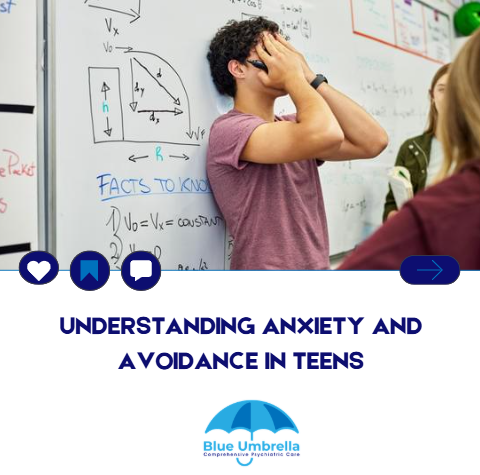
Understanding Anxiety and Avoidance in Teens

Anxiety is one of the most common mental health challenges in adolescence. According to the Anxiety & Depression Association of America, nearly 1 in 3 adolescents experiences an anxiety disorder at some point, often leading to avoidance behaviors. Avoidance may provide temporary relief but can reinforce fears and limit personal growth.


Recognizing Avoidance Patterns

Signs that a teen is struggling with anxiety and avoidance include:


  • Skipping school or social events

  • Avoiding new experiences or responsibilities

  • Expressing frequent negative self-talk (“I can’t,” “I’m not good enough”)

  • Seeking constant reassurance from parents or peers

Evidence-Based Strategies

Research supports several approaches to help teens manage anxiety and reduce avoidance:


  • Cognitive Behavioral Therapy (CBT): Helps teens identify negative thought patterns and develop healthier thinking strategies.

  • Exposure Therapy: Gradual exposure to feared situations reduces avoidance behaviors over time.

  • Mindfulness and Coping Skills: Techniques to calm the nervous system, increase awareness, and regulate emotions.

Role of Group Therapy

Groups like Vibe & Thrive provide a safe, structured space for teens to practice exposure and social skills under professional supervision. Activities allow teens to experience small successes, build confidence, and receive feedback on coping strategies.


Parent and Caregiver Support

Parents can reinforce skills at home by:


  • Encouraging small steps toward challenging situations
  • Modeling healthy coping strategies
  • Celebrating progress, no matter how minor

Blue Umbrella Services

Teens can also benefit from individual therapy sessions, which provide tailored strategies for anxiety management, self-esteem building, and coping with avoidance behaviors. Combining group and individual therapy ensures a holistic approach to emotional development.


Take Action: If your teen struggles with anxiety or avoidance, consider enrolling them in a group or scheduling individual therapy. Blue Umbrella Psychiatry is here to support their growth and confidence.


March 4, 2026
You’ve tried therapy. You’ve tried medication. You’ve given it time. And yet, something still feels heavy. For many individuals struggling with depression, anxiety, mood instability, or persistent symptoms, the path to feeling better is not always linear. When traditional antidepressants or therapy alone haven’t provided enough relief, it does not mean you have failed treatment. It may mean your brain needs a different approach. At Blue Umbrella Psychiatry , we now offer ketamine therapy in three forms: IV, IM, and in-clinic oral administration , allowing for personalized care based on clinical needs and patient comfort.
February 26, 2026
From the outside, everything looks good. You show up to work. You meet deadlines. You’re reliable, organized, and productive. People might even describe you as “on top of things.” But inside, it’s a different story. Your mind rarely slows down. You’re constantly anticipating problems, replaying conversations, or mentally running through to-do lists. Rest doesn’t feel restorative. Even on “good” days, there’s a persistent sense of tension, pressure, or exhaustion. This is often what high-functioning anxiety looks like—and it’s more common than many people realize.
February 19, 2026
Most of us have had a rough night of sleep and felt the effects the next day—irritable, foggy, unfocused, or emotionally sensitive. But when sleep problems become ongoing, they can affect much more than just energy levels. There’s a strong, two-way relationship between sleep and mental health, and understanding that connection is an important step toward feeling better. At Blue Umbrella Psychiatry, we often see how closely sleep and emotional well-being are intertwined. Let’s take a closer look at why sleep matters so much for mental health—and what to do when it’s not going well.
February 11, 2026
What to Expect When Starting an Antidepressant 
February 5, 2026
Why Talking to Others Is Good for Your Mental Health (Even When It Feels Hard)
January 29, 2026
How Small Wins Build Confidence and Resilience
January 22, 2026
As the new year begins, many people resolve to improve physical health, but emotional and mental well-being is just as crucial. Stress, anxiety, and overwhelming responsibilities can accumulate, making it difficult to focus, sleep, or feel at ease. Mindfulness and coping strategies are evidence-based tools that can improve emotional regulation, resilience, and overall quality of life.
January 8, 2026
Adolescence is a critical time for social development. Teens are learning to navigate friendships, school environments, and extracurricular activities, all while managing the emotional changes of growing up. Many teens experience anxiety, social discomfort, or avoidance behaviors that can impact their ability to engage with peers confidently.  Blue Umbrella Psychiatry is excited to introduce the Vibe & Thrive Teen Social Skills Group, designed for teens aged 13–17 to practice social skills, reduce anxious thoughts, and build confidence in a safe and supportive environment.
January 1, 2026
As we step into a new year, it’s natural to reflect on what we’ve achieved and what we hope to accomplish in the months ahead. While physical health goals often take center stage, mental health is equally important. Prioritizing emotional wellness, resilience, and personal growth can set the tone for a fulfilling 2026.
December 25, 2025
On this Christmas Day, we want to take a moment to thank our patients for letting Blue Umbrella Psychiatry be a part of your mental health journey in 2025. Your trust in us means the world, and we’re especially grateful to those who referred family and friends, joined our therapy groups, and moved with us to our new location. You make our community stronger, and we truly appreciate every one of you.  The end of the year is a great time to pause, reflect, and celebrate the progress you’ve made—even small steps matter. Whether it was attending sessions regularly, trying new coping strategies, or supporting a loved one’s mental health, your commitment deserves recognition.