
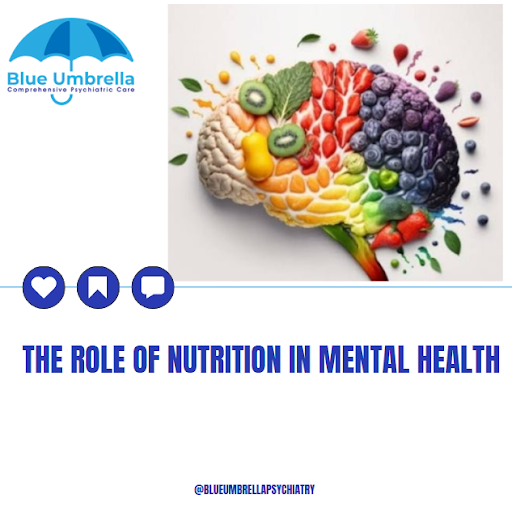
The connection between nutrition and mental health is becoming clearer, as research continues to reveal the impact that diet has on our emotional and psychological well-being. At Blue Umbrella Psychiatry, we recognize the importance of a balanced diet in managing mental health and are dedicated to supporting our patients' well-being through a holistic approach.
The Gut-Brain Axis: How Diet Affects Mental Health
The gut-brain axis is a bidirectional communication system between the gut and the brain that affects how we think, feel, and behave. Research has shown that the state of our gut health can directly influence mental health conditions such as depression, anxiety, and stress.
Recent studies have found that an imbalance in gut bacteria (also known as dysbiosis) can have a negative impact on mental health. Probiotic-rich foods such as yogurt, kefir, and fermented vegetables can help restore a healthy balance of gut bacteria, potentially improving mood and cognitive function.
Nutrients That Support Mental Health
Certain nutrients play a key role in maintaining mental health, and ensuring adequate intake of these nutrients can have a positive impact on mood and cognitive function. Some key nutrients to consider include:
- Omega-3 Fatty Acids: Found in fatty fish like salmon and mackerel, omega-3s have been shown to reduce symptoms of depression and anxiety.
- B Vitamins: B12 and folate are essential for brain health and mood regulation. Foods like leafy greens, eggs, and fortified cereals can help boost your intake.
- Magnesium: This mineral helps regulate the nervous system and is linked to improved mood. Magnesium-rich foods include nuts, seeds, and leafy vegetables.
A Mental Health-Boosting Diet
A healthy diet can significantly enhance mental health. Focus on consuming a variety of nutrient-dense foods that support brain function and mood. Incorporating foods rich in antioxidants, omega-3s, vitamins, and minerals can have a positive impact on mental health.
At
Blue Umbrella Psychiatry, we understand that nutrition plays a vital role in supporting overall well-being. If you're struggling with mental health issues, we can help guide you toward dietary changes and other treatments that can improve your mental health. To learn more, call
954-341-5215 and schedule an appointment with our team.