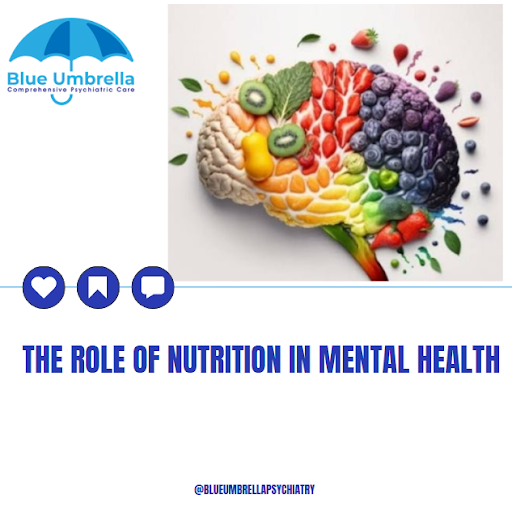
The Role of Nutrition in Mental Health

The connection between nutrition and mental health is becoming clearer, as research continues to reveal the impact that diet has on our emotional and psychological well-being. At Blue Umbrella Psychiatry, we recognize the importance of a balanced diet in managing mental health and are dedicated to supporting our patients' well-being through a holistic approach.


The Gut-Brain Axis: How Diet Affects Mental Health

The gut-brain axis is a bidirectional communication system between the gut and the brain that affects how we think, feel, and behave. Research has shown that the state of our gut health can directly influence mental health conditions such as depression, anxiety, and stress.


Recent studies have found that an imbalance in gut bacteria (also known as dysbiosis) can have a negative impact on mental health. Probiotic-rich foods such as yogurt, kefir, and fermented vegetables can help restore a healthy balance of gut bacteria, potentially improving mood and cognitive function.


Nutrients That Support Mental Health

Certain nutrients play a key role in maintaining mental health, and ensuring adequate intake of these nutrients can have a positive impact on mood and cognitive function. Some key nutrients to consider include:

  • Omega-3 Fatty Acids: Found in fatty fish like salmon and mackerel, omega-3s have been shown to reduce symptoms of depression and anxiety.
  • B Vitamins: B12 and folate are essential for brain health and mood regulation. Foods like leafy greens, eggs, and fortified cereals can help boost your intake.
  • Magnesium: This mineral helps regulate the nervous system and is linked to improved mood. Magnesium-rich foods include nuts, seeds, and leafy vegetables.


A Mental Health-Boosting Diet

A healthy diet can significantly enhance mental health. Focus on consuming a variety of nutrient-dense foods that support brain function and mood. Incorporating foods rich in antioxidants, omega-3s, vitamins, and minerals can have a positive impact on mental health.


At Blue Umbrella Psychiatry, we understand that nutrition plays a vital role in supporting overall well-being. If you're struggling with mental health issues, we can help guide you toward dietary changes and other treatments that can improve your mental health. To learn more, call 954-341-5215 and schedule an appointment with our team.

February 11, 2026
What to Expect When Starting an Antidepressant 
February 5, 2026
Why Talking to Others Is Good for Your Mental Health (Even When It Feels Hard)
January 29, 2026
How Small Wins Build Confidence and Resilience
January 22, 2026
As the new year begins, many people resolve to improve physical health, but emotional and mental well-being is just as crucial. Stress, anxiety, and overwhelming responsibilities can accumulate, making it difficult to focus, sleep, or feel at ease. Mindfulness and coping strategies are evidence-based tools that can improve emotional regulation, resilience, and overall quality of life.
January 15, 2026
Anxiety is one of the most common mental health challenges in adolescence. According to the Anxiety & Depression Association of America, nearly 1 in 3 adolescents experiences an anxiety disorder at some point, often leading to avoidance behaviors. Avoidance may provide temporary relief but can reinforce fears and limit personal growth.
January 8, 2026
Adolescence is a critical time for social development. Teens are learning to navigate friendships, school environments, and extracurricular activities, all while managing the emotional changes of growing up. Many teens experience anxiety, social discomfort, or avoidance behaviors that can impact their ability to engage with peers confidently.  Blue Umbrella Psychiatry is excited to introduce the Vibe & Thrive Teen Social Skills Group, designed for teens aged 13–17 to practice social skills, reduce anxious thoughts, and build confidence in a safe and supportive environment.
January 1, 2026
As we step into a new year, it’s natural to reflect on what we’ve achieved and what we hope to accomplish in the months ahead. While physical health goals often take center stage, mental health is equally important. Prioritizing emotional wellness, resilience, and personal growth can set the tone for a fulfilling 2026.
December 25, 2025
On this Christmas Day, we want to take a moment to thank our patients for letting Blue Umbrella Psychiatry be a part of your mental health journey in 2025. Your trust in us means the world, and we’re especially grateful to those who referred family and friends, joined our therapy groups, and moved with us to our new location. You make our community stronger, and we truly appreciate every one of you.  The end of the year is a great time to pause, reflect, and celebrate the progress you’ve made—even small steps matter. Whether it was attending sessions regularly, trying new coping strategies, or supporting a loved one’s mental health, your commitment deserves recognition.
December 18, 2025
The holiday season can be joyful, but it can also bring stress, irregular routines, and emotional challenges. At Blue Umbrella Psychiatry, we understand how the holidays affect mental health, and we’re here to offer practical strategies to help you maintain balance, manage stress, and enjoy the season.
December 11, 2025
The start of a new year is a natural time to reflect, reset, and set goals—not just for work or fitness, but for your mental health as well. At Blue Umbrella Psychiatry, we know that small, realistic steps often lead to the most meaningful change. Here’s what you need to know about setting mental health goals and how we can support you in achieving them.