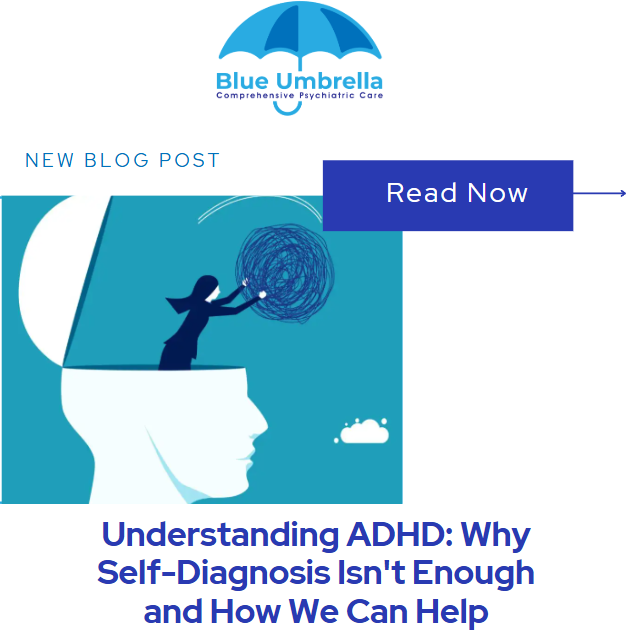
In recent years, there has been an increasing conversation around Attention Deficit Hyperactivity Disorder (ADHD), with many individuals suspecting they may have it. Whether it’s the inability to focus, a tendency to forget tasks, or struggles with organization, ADHD is often considered a catch-all explanation for a variety of behaviors. However, it’s important to understand that self-diagnosing ADHD can be misleading, and getting a professional diagnosis is essential for proper treatment and support.
At Blue Umbrella Psychiatry, we believe in taking a thorough, comprehensive approach to mental health. If you’re concerned that you may have ADHD, it's crucial to seek help from a trained professional who can evaluate your symptoms, rule out other conditions, and provide you with an accurate diagnosis. In this blog, we’ll explore the signs and symptoms of ADHD, why a professional diagnosis is important, and how we can help.
What is ADHD?
ADHD is a neurodevelopmental disorder that affects both children and adults, and it can manifest in various ways. It’s characterized by patterns of inattention, impulsivity, and hyperactivity that can significantly impact day-to-day life, including academic, professional, and personal functioning.
While many of the symptoms of ADHD may overlap with other conditions, only a trained healthcare provider can provide an accurate diagnosis through a combination of observation, assessment, and sometimes input from family members or colleagues.
Signs and Symptoms of ADHD
ADHD symptoms can vary widely from person to person, but they typically fall into two categories: inattention and hyperactivity/impulsivity. Let’s explore these in more detail.
Inattention Symptoms:
- Difficulty staying focused on tasks or conversations, often shifting attention between multiple things at once.
- Frequent mistakes in school or work due to careless errors, not paying attention to details.
- Forgetfulness in daily activities, such as forgetting appointments or misplacing personal items.
- Difficulty following through on instructions or completing tasks, often leaving projects unfinished.
- Avoiding tasks that require sustained mental effort, such as reading or paperwork.
- Easily distracted by external stimuli, like noises or other activities going on around you.
Hyperactivity and Impulsivity Symptoms:
- Restlessness, such as difficulty sitting still or fidgeting in meetings or conversations.
- Interrupting others in conversation or activities, not waiting your turn.
- Talking excessively, often jumping from topic to topic without letting others speak.
- Impulsive decision-making, acting without considering the consequences, leading to risky behavior or mistakes.
- Difficulty staying quiet during leisure activities or conversations.
It’s important to note that not everyone with ADHD will display all of these symptoms, and some people may experience a combination of both inattention and hyperactivity/impulsivity, while others may have predominantly one type of symptom.
Why It’s Important to Get a Professional Diagnosis
Many of the symptoms of ADHD can overlap with other mental health conditions, such as anxiety, depression, or learning disabilities. Simply suspecting that you have ADHD based on self-reflection or advice from friends or family members isn’t enough. In fact, self-diagnosis can lead to inaccurate assumptions and missed opportunities for treatment.
A professional evaluation for ADHD typically involves:
- A comprehensive assessment, which may include interviews, questionnaires, and observation.
- A review of personal and family medical history, to identify any genetic or environmental factors that could contribute to symptoms.
- Ruling out other conditions that may present similar symptoms, such as anxiety or depression.
- Feedback from those who know you well, such as teachers, family members, or coworkers.
Once diagnosed, a provider can develop a treatment plan that is personalized to your unique needs. This plan may include medication, therapy, behavioral strategies, or a combination of approaches.
How We Can Help at Blue Umbrella Psychiatry
At Blue Umbrella Psychiatry, we offer comprehensive evaluations and treatment options for individuals concerned about ADHD. Our team is trained to conduct thorough assessments that help to ensure an accurate diagnosis and rule out other potential causes for the symptoms you’re experiencing.
Once diagnosed, our providers will work with you to develop a personalized treatment plan that can help manage ADHD symptoms effectively. Treatment options may include:
- Medication: Stimulants and non-stimulants are commonly prescribed to help improve focus and reduce impulsivity in individuals with ADHD.
- Cognitive Behavioral Therapy (CBT): CBT can help individuals with ADHD develop strategies to improve organization, time management, and impulse control.
- Coaching and Support: In some cases, ADHD coaching can help individuals build skills and strategies for better managing daily life.
- Lifestyle Adjustments: We may also recommend adjustments to your environment or routine, such as creating structured schedules, reducing distractions, and using tools like reminders and planners.
If you suspect you have ADHD or have been struggling with symptoms that are affecting your daily life, Blue Umbrella Psychiatry is here to help. Our team of mental health professionals will provide a thorough evaluation and work with you to create a personalized treatment plan that fits your needs. ADHD is manageable with the right approach, and we are dedicated to supporting you every step of the way.
Call Blue Umbrella Psychiatry at 954-341-5215 to schedule an appointment today. Let us help you navigate your mental health and take the next step toward a clearer, more focused future.