
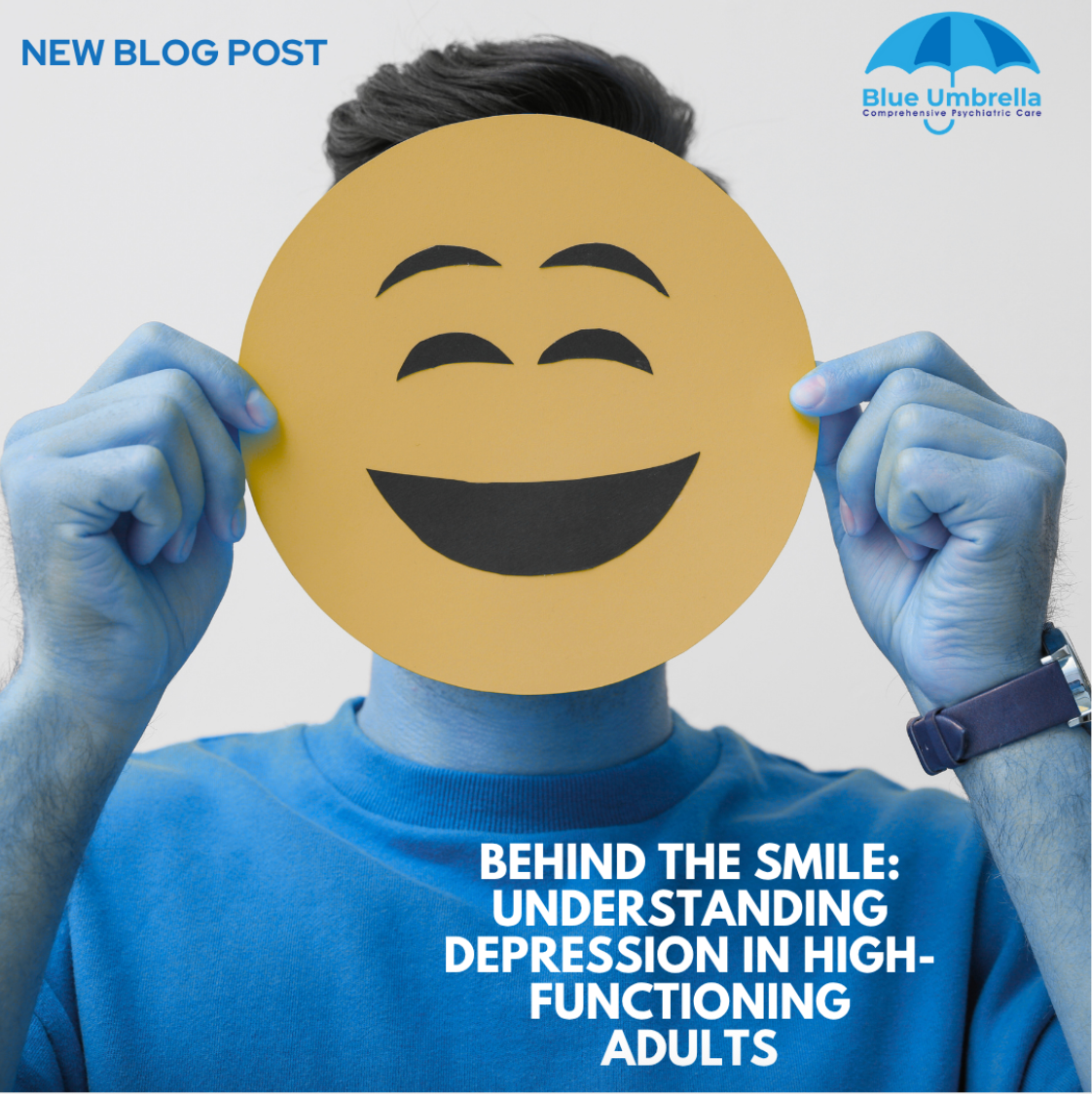
When we think of depression, we often picture someone who can’t get out of bed, who cries constantly, or who’s visibly struggling. But depression doesn’t always look like what we expect. Many adults live with high-functioning depression — managing careers, parenting, and responsibilities on the outside, while quietly battling pain on the inside.
At Blue Umbrella Psychiatry, we frequently see individuals who “have it all together” but feel empty, exhausted, or numb underneath. If this sounds like you or someone you love, you’re not alone — and there are ways to find balance, relief, and renewed purpose.
What Is High-Functioning Depression?
High-functioning depression isn’t a clinical diagnosis on its own — it often refers to Persistent Depressive Disorder (dysthymia) or Major Depressive Disorder that’s masked by productivity. People with high-functioning depression may keep up appearances, perform well at work, and fulfill social roles — all while feeling internally depleted.
Common signs include:
- Constant low mood or emptiness
- Feeling tired or emotionally flat, even with enough sleep
- Difficulty enjoying things you used to love
- Irritability, guilt, or self-criticism
- Overworking or perfectionism to distract from inner distress
- Withdrawing emotionally, even while staying socially active
- “Everything is fine” on the outside, but “I’m not okay” inside
This form of depression is especially tricky — because it can go unnoticed, even by the person experiencing it.
Why It Often Gets Missed
High-functioning adults are often praised for being dependable, driven, and strong. This can lead to pressure to hide vulnerability, push through symptoms, or dismiss your own suffering.
You might tell yourself:
"Other people have it worse."
"I should be grateful."
"I just need to work harder."
But depression doesn’t care how successful you are or how busy your calendar is. If you’re feeling emotionally numb, disconnected, or constantly overwhelmed, it’s worth paying attention.
The Impact of Ignoring High-Functioning Depression
When untreated, high-functioning depression can gradually erode your quality of life. Over time, it can lead to:
- Burnout and chronic fatigue
- Relationship strain
- Poor concentration and memory
- Increased risk for anxiety or substance use
- Loss of meaning or joy
Worse, people often delay seeking help because they don’t “look depressed.” That’s why compassionate, early support matters.
How We Help at Blue Umbrella Psychiatry
You don’t have to wait for a crisis to seek help. At Blue Umbrella Psychiatry, we provide psychiatric evaluations and personalized treatment plans for adults dealing with all types of depression — including the quiet kind.
Our approach includes:
- Medication management, when appropriate, to restore mood stability
- Therapy to address emotional burnout, perfectionism, and core beliefs
- Lifestyle support, including sleep, nutrition, and stress reduction strategies
- Ongoing collaboration between psychiatry and therapy to ensure continuity of care
We aim to create a space where you don’t have to pretend everything is fine — because healing starts with honesty and support.
You're Not Broken — You're Human
High-functioning depression is not a character flaw. It’s a real mental health condition that deserves real care. You’re allowed to have struggles, even if everything “looks fine.” You’re allowed to ask for help, even if others rely on you.
Therapy and psychiatric support can help you reconnect with your feelings, rediscover joy, and manage your mental health in sustainable ways.
Let’s Talk — You Don’t Have to Do It Alone
If you’ve been carrying quiet sadness, chronic fatigue, or emotional numbness, we see you — and we’re here to help. At Blue Umbrella Psychiatry, our team offers compassionate, integrated care that goes beyond the diagnosis.
Together, we’ll explore what you’re going through and create a plan that fits your life — so you can feel more like yourself again.