Decision Fatigue: When Too Many Choices Drain Your Mind

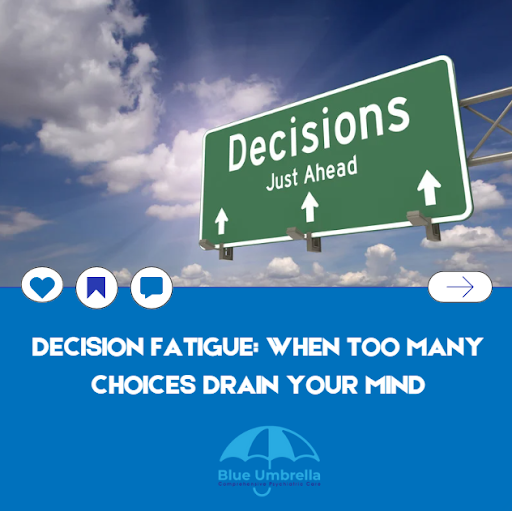
Decision Fatigue: When Too Many Choices Drain Your Mind


The Weight of Daily Decisions


From choosing what to wear to managing work, family, and social obligations, our days are filled with choices. But every decision—big or small—uses mental energy. Over time, this constant demand can lead to decision fatigue, a state where our ability to think clearly and make sound judgments begins to fade.


When decision fatigue hits, even simple tasks feel overwhelming. It’s a common but often overlooked cause of burnout, particularly during busy seasons like the holidays.


What Is Decision Fatigue?


Decision fatigue occurs when the brain becomes overworked from too many choices, leading to poor decision-making and emotional exhaustion.

Common signs include:


  • Procrastination or avoidance
  • Irritability and low patience
  • Mental fog or indecisiveness
  • Impulsive or regretful decisions

When our mental energy is depleted, we’re more likely to choose what’s easiest—not what’s best.


Why It Peaks During the Holidays


Between travel plans, shopping, and social events, the holidays add dozens of extra decisions to our already full plates. This overload can increase stress, reduce patience, and heighten conflict in relationships.


How to Restore Mental Clarity


Protecting your mental energy is key:


  • Simplify your routine: Plan meals and tasks in advance.
  • Set boundaries: Say no to commitments that drain you.
  • Take mental breaks: Even five minutes of mindfulness helps.
  • Prioritize rest: Sleep and downtime reset decision-making capacity.

Therapy can help identify sources of stress and build strategies to regain control.

The First Step Toward Balance


Living with phobias or anxiety can feel isolating—but you don’t have to go through it alone. With professional support, it’s possible to break free from avoidance, build confidence, and regain control of your life.


📞 Call Blue Umbrella Psychiatry today at 954-341-5215 to schedule an appointment and learn how therapy and psychiatric care can help you face your fears and move forward with confidence.



February 18, 2026
Most of us have had a rough night of sleep and felt the effects the next day—irritable, foggy, unfocused, or emotionally sensitive. But when sleep problems become ongoing, they can affect much more than just energy levels. There’s a strong, two-way relationship between sleep and mental health, and understanding that connection is an important step toward feeling better. At Blue Umbrella Psychiatry, we often see how closely sleep and emotional well-being are intertwined. Let’s take a closer look at why sleep matters so much for mental health—and what to do when it’s not going well.
February 11, 2026
What to Expect When Starting an Antidepressant 
February 5, 2026
Why Talking to Others Is Good for Your Mental Health (Even When It Feels Hard)
January 29, 2026
How Small Wins Build Confidence and Resilience
January 22, 2026
As the new year begins, many people resolve to improve physical health, but emotional and mental well-being is just as crucial. Stress, anxiety, and overwhelming responsibilities can accumulate, making it difficult to focus, sleep, or feel at ease. Mindfulness and coping strategies are evidence-based tools that can improve emotional regulation, resilience, and overall quality of life.
January 15, 2026
Anxiety is one of the most common mental health challenges in adolescence. According to the Anxiety & Depression Association of America, nearly 1 in 3 adolescents experiences an anxiety disorder at some point, often leading to avoidance behaviors. Avoidance may provide temporary relief but can reinforce fears and limit personal growth.
January 8, 2026
Adolescence is a critical time for social development. Teens are learning to navigate friendships, school environments, and extracurricular activities, all while managing the emotional changes of growing up. Many teens experience anxiety, social discomfort, or avoidance behaviors that can impact their ability to engage with peers confidently.  Blue Umbrella Psychiatry is excited to introduce the Vibe & Thrive Teen Social Skills Group, designed for teens aged 13–17 to practice social skills, reduce anxious thoughts, and build confidence in a safe and supportive environment.
January 1, 2026
As we step into a new year, it’s natural to reflect on what we’ve achieved and what we hope to accomplish in the months ahead. While physical health goals often take center stage, mental health is equally important. Prioritizing emotional wellness, resilience, and personal growth can set the tone for a fulfilling 2026.
December 25, 2025
On this Christmas Day, we want to take a moment to thank our patients for letting Blue Umbrella Psychiatry be a part of your mental health journey in 2025. Your trust in us means the world, and we’re especially grateful to those who referred family and friends, joined our therapy groups, and moved with us to our new location. You make our community stronger, and we truly appreciate every one of you.  The end of the year is a great time to pause, reflect, and celebrate the progress you’ve made—even small steps matter. Whether it was attending sessions regularly, trying new coping strategies, or supporting a loved one’s mental health, your commitment deserves recognition.
December 18, 2025
The holiday season can be joyful, but it can also bring stress, irregular routines, and emotional challenges. At Blue Umbrella Psychiatry, we understand how the holidays affect mental health, and we’re here to offer practical strategies to help you maintain balance, manage stress, and enjoy the season.