
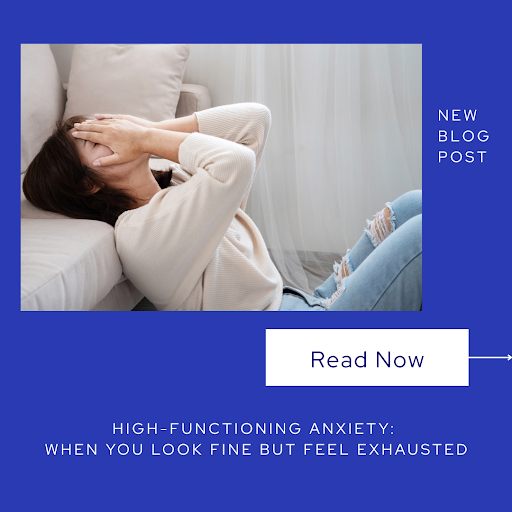
From the outside, everything looks good.
You show up to work. You meet deadlines. You’re reliable, organized, and productive. People might even describe you as “on top of things.”
But inside, it’s a different story.
Your mind rarely slows down. You’re constantly anticipating problems, replaying conversations, or mentally running through to-do lists. Rest doesn’t feel restorative. Even on “good” days, there’s a persistent sense of tension, pressure, or exhaustion.
This is often what high-functioning anxiety looks like—and it’s more common than many people realize.
What Is High-Functioning Anxiety?

High-functioning anxiety isn’t an official diagnostic term, but it’s a widely recognized pattern that mental health professionals see every day.
People with high-functioning anxiety are often successful, driven, and capable. Anxiety may even fuel their achievements—pushing them to prepare excessively, overperform, and stay constantly vigilant. The problem is that this level of functioning comes at a cost.
Instead of feeling motivated, many feel:
- Chronically overwhelmed or “on edge”
- Mentally exhausted, even after sleeping
- Afraid of making mistakes or disappointing others
- Unable to relax without guilt
- Trapped in cycles of overthinking and self-criticism
Because life appears to be going well, anxiety often goes unnoticed—or minimized, even by the person experiencing it.
Signs You Might Be Living With High-Functioning Anxiety
High-functioning anxiety doesn’t always look like panic attacks or obvious distress. Some common signs include:
- Difficulty turning your mind off, especially at night
- Perfectionism or fear of failure
- Overpreparing or overworking to avoid mistakes
- Irritability, muscle tension, or frequent headaches
- Feeling restless, even during downtime
- A constant sense that something bad could happen
- Feeling emotionally drained despite being “successful”
Many people assume this is just their personality or the price of being ambitious. Over time, though, untreated anxiety can lead to burnout, depression, sleep disorders, and physical health concerns.
Why High-Functioning Anxiety Is Often Overlooked

One of the hardest parts of high-functioning anxiety is that it’s easy to dismiss.
You might tell yourself:
- “Other people have it worse.”
- “I’m doing fine—why complain?”
- “This is just how I am.”
Friends, family, and coworkers may not see your internal struggle, which can make it even harder to ask for help. But anxiety doesn’t have to reach a breaking point to deserve care.
Feeling constantly overwhelmed or exhausted is not a personal failure—and it’s not something you have to push through alone.
How Therapy Can Help
Therapy provides a space to slow down, reflect, and understand what’s driving the anxiety beneath the surface.
In therapy, you can:
- Learn to identify anxious thought patterns and challenge them
- Develop healthier coping strategies for stress and overthinking
- Address perfectionism, people-pleasing, and fear of failure
- Build skills for emotional regulation and self-compassion
- Reconnect with a sense of balance and meaning
For many people with high-functioning anxiety, therapy isn’t about “fixing” who they are—it’s about learning how to live without constant internal pressure.
When Medication Management May Be Helpful

For some individuals, therapy alone isn’t enough to fully manage anxiety symptoms—and that’s okay.
Medication can be a helpful tool when anxiety:
- Interferes with sleep, focus, or daily functioning
- Causes ongoing physical symptoms like tension or restlessness
- Feels constant, despite lifestyle changes and coping strategies
Psychiatric medication management is a collaborative process. A psychiatric provider works closely with you to understand your symptoms, medical history, and goals, and to determine whether medication might help reduce the intensity of anxiety so therapy and daily life feel more manageable.
Medication doesn’t change who you are—it can help quiet the noise enough for you to breathe again.
You Don’t Have to Look “Not Okay” to Deserve Support
High-functioning anxiety thrives in silence. It tells people to keep going, keep achieving, and keep holding it together—no matter the cost.
But feeling exhausted, tense, or overwhelmed all the time isn’t something you just have to accept.
With the right combination of therapy and medication management, many people find relief, clarity, and a sense of ease they didn’t realize was possible.
If you look fine but feel anything but, support is available—and you don’t have to wait until you fall apart to seek it.
Take Action: Begin to learn how to manage anxiety and implement effective techniques, consider scheduling a session or joining a group at
Blue Umbrella Psychiatry. Our team is here to support your growth, build confidence, and foster long-term mental health.