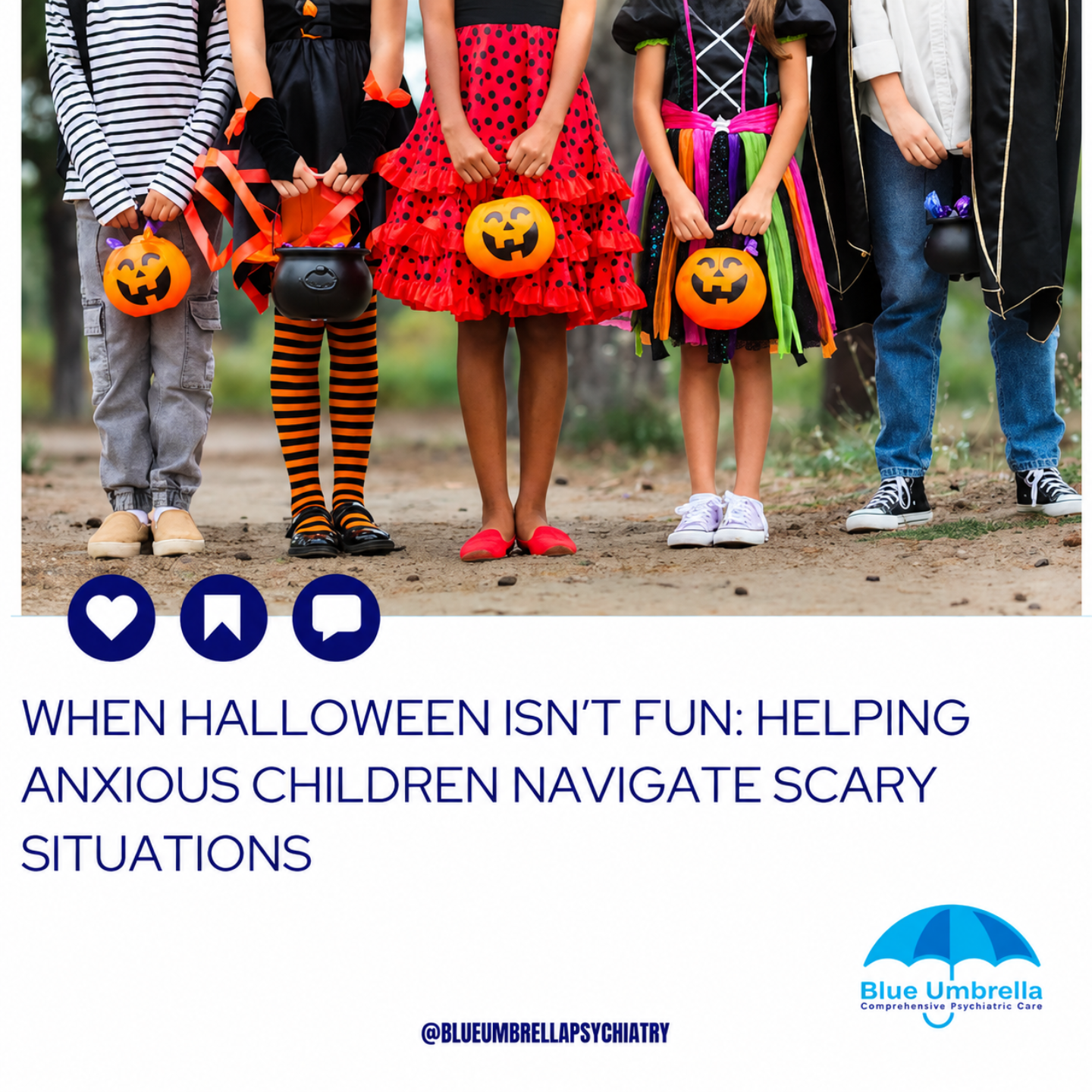
When Halloween Isn’t Fun: Helping Anxious Children Navigate Scary Situations
For many children, Halloween is one of the most exciting times of the year.
Costumes, candy, decorations, parties, and trick-or-treating can create memorable experiences.
But for some children, Halloween can feel overwhelming.
Loud noises, unfamiliar people, scary decorations, changes in routine, crowded environments, and frightening costumes can trigger anxiety or sensory overload.
A child who does not want to participate does not necessarily need to be pushed into the experience.
Understanding what is causing the fear can help parents create a Halloween experience that feels safer and more manageable.
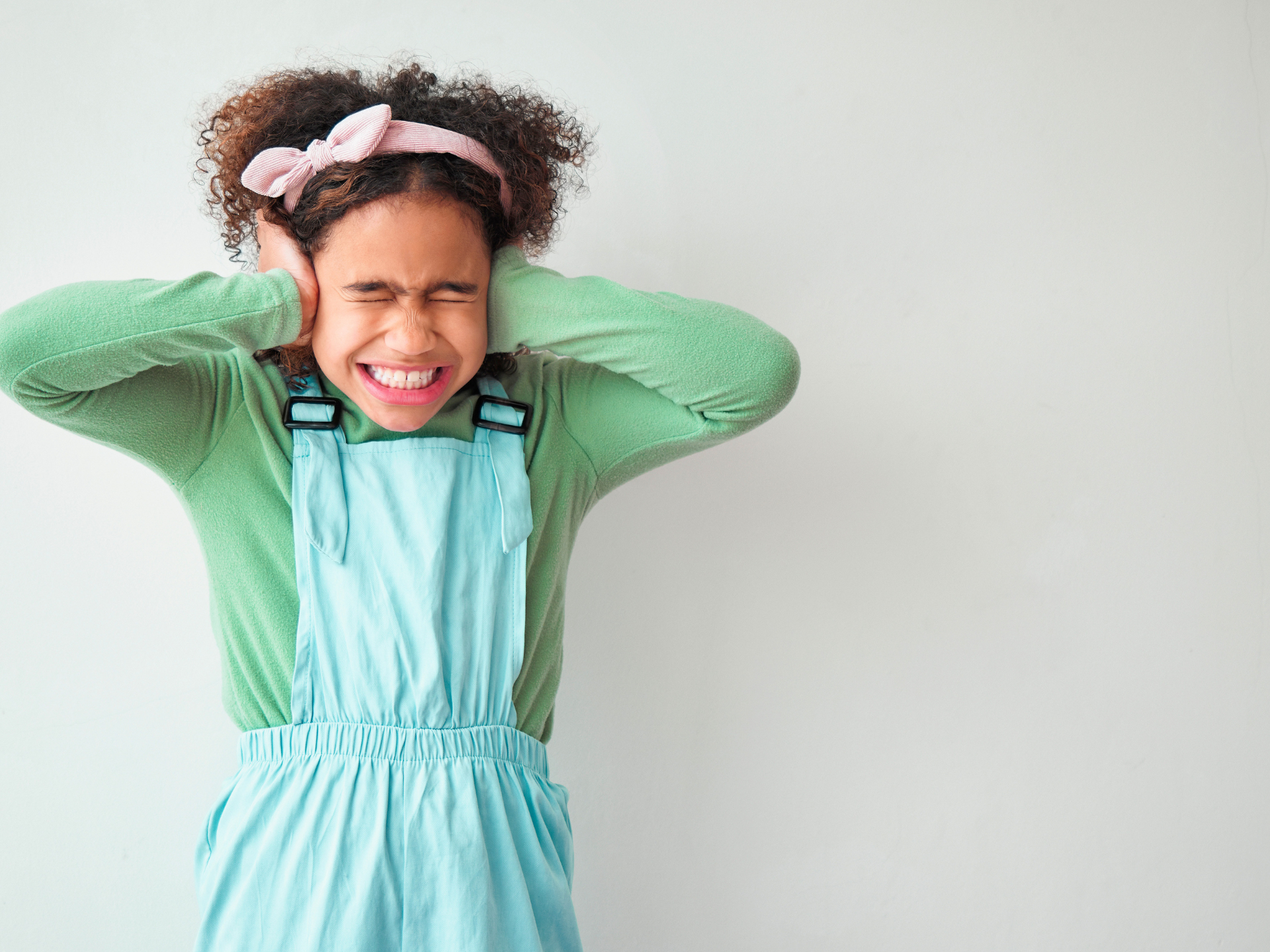
Why Halloween Can Feel Overwhelming
Halloween introduces many things that may be outside a child's normal routine.
Children may encounter:
- Loud music
- Crowds
- Unfamiliar people
- Masks and costumes
- Dark environments
- Unexpected noises
- Scary decorations
- Changes to bedtime
- Large amounts of stimulation
- Pressure to participate socially
For some children, these changes are exciting.
For others, they can be overwhelming.
Fear Is a Normal Part of Childhood
Children naturally develop fears as they grow.
Being afraid of the dark, monsters, unfamiliar people, or scary situations can be part of normal development.
Parents can help children learn that fear does not always mean something is dangerous.
Instead of immediately saying:
“There's nothing to be scared of.”
Try:
“I can see that this feels scary. Let's figure out what would help you feel more comfortable.”
Acknowledging a child's feelings can help them feel understood.
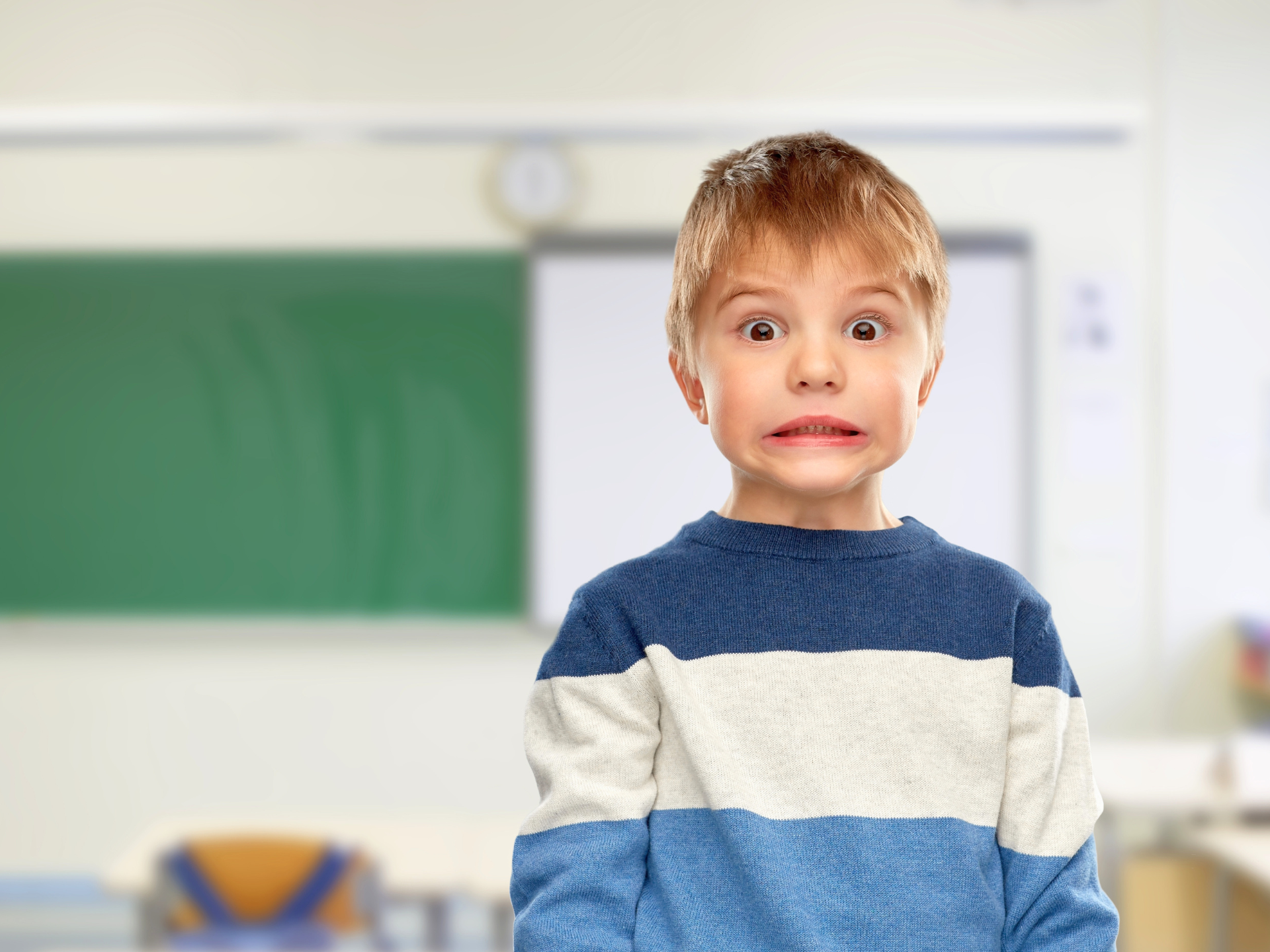
When Anxiety May Be More Than a Halloween Fear
Occasional fear around Halloween is generally not a cause for concern.
However, it may be worth paying closer attention if anxiety:
- Is extremely intense
- Prevents the child from participating in everyday activities
- Continues long after Halloween
- Causes significant sleep problems
- Leads to frequent physical complaints
- Results in persistent avoidance
- Interferes with school or friendships
- Causes significant distress for the child or family
The key is looking at how much the anxiety affects the child's daily functioning.
Preparing an Anxious Child for Halloween
Preparation can make unfamiliar situations feel more predictable.
Parents may want to:
- Talk about Halloween ahead of time
- Show children pictures of costumes or decorations
- Let children choose their own costume
- Practice wearing the costume before Halloween
- Explain what trick-or-treating will look like
- Visit familiar homes first
- Create an exit plan
- Bring headphones if noise is overwhelming
- Keep routines as consistent as possible
- Allow breaks when needed
The goal is not to eliminate every uncomfortable feeling.
It is to help the child feel capable of managing the experience.
Let Your Child Have Some Control
Children often feel less anxious when they have choices.
Instead of:
“You have to wear this costume.”
Try:
“Would you rather wear this costume or this one?”
Instead of:
“We are going trick-or-treating for two hours.”
Try:
“Let's start with a few houses and see how you feel.”
Giving children reasonable choices can help them develop confidence.
Avoid Forcing Participation
It can be tempting to encourage a child to “just try it.”
But forcing a child into an overwhelming situation can sometimes increase fear.
Instead, consider gradual exposure.
A child who is afraid of trick-or-treating might start by:
- Looking at pictures of Halloween decorations.
- Visiting a decorated home during the daytime.
- Wearing a costume at home.
- Walking around the neighborhood with a parent.
- Visiting one familiar house.
- Gradually increasing participation as comfort improves.
Every child is different.
The goal is progress—not perfection.
Halloween and Sensory Overload
Some children may become overwhelmed by the sensory environment surrounding Halloween.
Signs of sensory overload may include:
- Covering their ears
- Becoming unusually irritable
- Crying
- Wanting to leave
- Becoming quiet or withdrawn
- Difficulty communicating
- Becoming overwhelmed by crowds
- Difficulty transitioning between activities
Parents can help by creating opportunities for quiet breaks and reducing unnecessary stimulation.
Questions Parents Can Ask
If your child is struggling with Halloween-related anxiety, consider:
- What specifically feels scary?
- Is it the costumes, crowds, noise, or uncertainty?
- Does your child experience anxiety in other situations?
- Are they avoiding school or social activities?
- Are fears affecting sleep?
- Does your child frequently worry about other situations?
- What helps your child feel safe and confident?
Understanding the source of the fear can help determine the best way to respond.
When to Seek Additional Support
If anxiety is affecting your child's ability to participate in everyday activities, attend school, sleep, socialize, or function comfortably, professional support may be helpful.
A mental health provider can help determine whether anxiety is developmentally typical or whether additional evaluation and treatment may be appropriate.
At Blue Umbrella Psychiatry, we provide personalized psychiatric care for children, adolescents, and adults. Our comprehensive services include psychiatric evaluations, medication management, therapy, Transcranial Magnetic Stimulation (TMS), and Ketamine treatment when clinically appropriate. We partner with patients and families to create individualized treatment plans that support lasting mental wellness.
Take Action
Halloween does not have to look the same for every child.
For some children, a neighborhood full of costumes and decorations is exciting.
For others, a quiet evening at home may feel much more comfortable.
What matters most is helping children feel safe, supported, and understood while gradually building their confidence.
If your child's anxiety goes beyond Halloween and begins affecting school, friendships, sleep, or everyday life, it may be time to seek additional support.
Sometimes the bravest step is simply asking for help. 💙