Why Holidays Like the 4th of July Can Trigger Anxiety and Stress
Holidays like the 4th of July are often associated with celebration, family gatherings, fireworks, and time off. While many people look forward to these events, others may experience increased anxiety, stress, or emotional discomfort during this time. At Blue Umbrella Psychiatry, we often see a rise in anxiety symptoms around major holidays, especially when routines are disrupted or environments become overwhelming.

Why Holidays Can Increase Anxiety
Several factors can make holidays like the 4th of July feel emotionally challenging:
1. Sensory overload
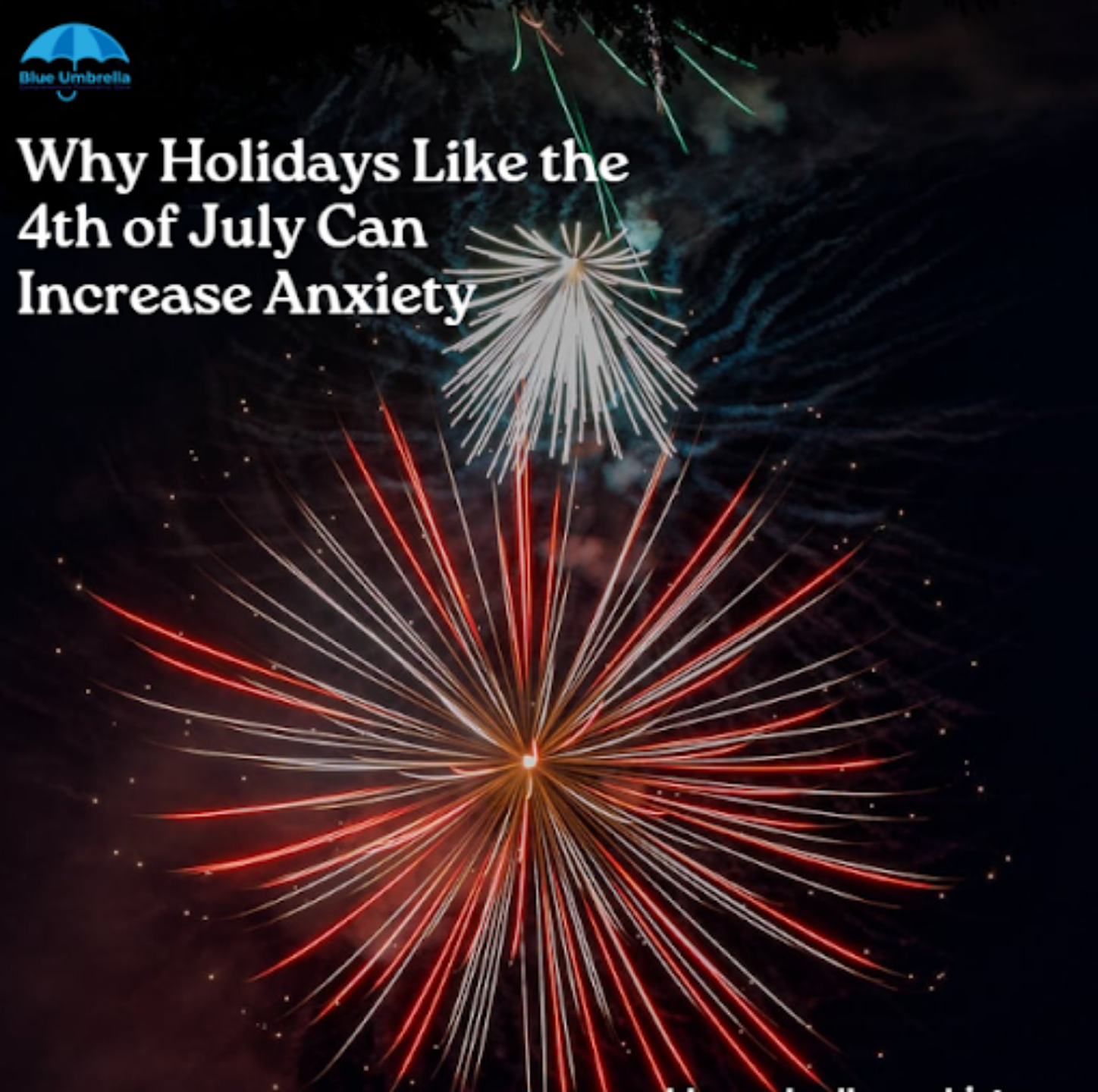
Fireworks, crowds, and loud environments can overstimulate the nervous system and trigger anxiety or panic, especially for individuals with PTSD or sensory sensitivities.
2. Social pressure
There is often an expectation to attend gatherings or appear happy, even when someone is struggling emotionally.
3. Routine disruption
Changes in sleep, eating habits, and daily structure can make anxiety symptoms more noticeable.
4. Substance exposure
Increased alcohol use during holiday celebrations can intensify mood swings and worsen anxiety.
5. Care responsibilities
Parents and caregivers may feel added pressure managing children, pets, and schedules during busy holiday events.
How Anxiety May Show Up

Holiday-related anxiety can appear in different ways, including:
- Irritability or restlessness
- Difficulty sleeping
- Racing thoughts
- Avoiding social events
- Feeling overwhelmed in loud or crowded settings
Coping Strategies for Holiday Anxiety
- Plan breaks during social gatherings
- Limit exposure to loud environments when possible
- Use grounding techniques during fireworks or crowds
- Communicate personal boundaries with family or friends
- Prioritize rest before and after events
When to Seek Support
If holiday anxiety feels intense or ongoing, it may be a sign of a broader anxiety disorder or underlying emotional stress. Professional support can help identify triggers and develop effective long-term coping strategies.
At Blue Umbrella Psychiatry, we offer individualized care including therapy, medication management, TMS, and Ketamine treatment for patients experiencing anxiety and stress-related conditions.
Take Action
If holidays feel more stressful than enjoyable, you are not alone. Support is available, and treatment can help you feel more grounded, supported, and in control.