Overcoming the Fear of Reaching Out to a Psychiatrist: How Blue Umbrella Psychiatry Cares for You

Making the decision to seek help from a psychiatrist can feel overwhelming and even intimidating. Whether you’re struggling with anxiety, depression, or any other mental health concern, the first step is often the hardest. At Blue Umbrella Psychiatry, we understand how difficult it can be to take that initial leap. That’s why we’re committed to making the experience as comfortable and supportive as possible—because reaching out for mental health care shouldn’t be something to fear, but a step toward healing and growth.
Why We’re Different


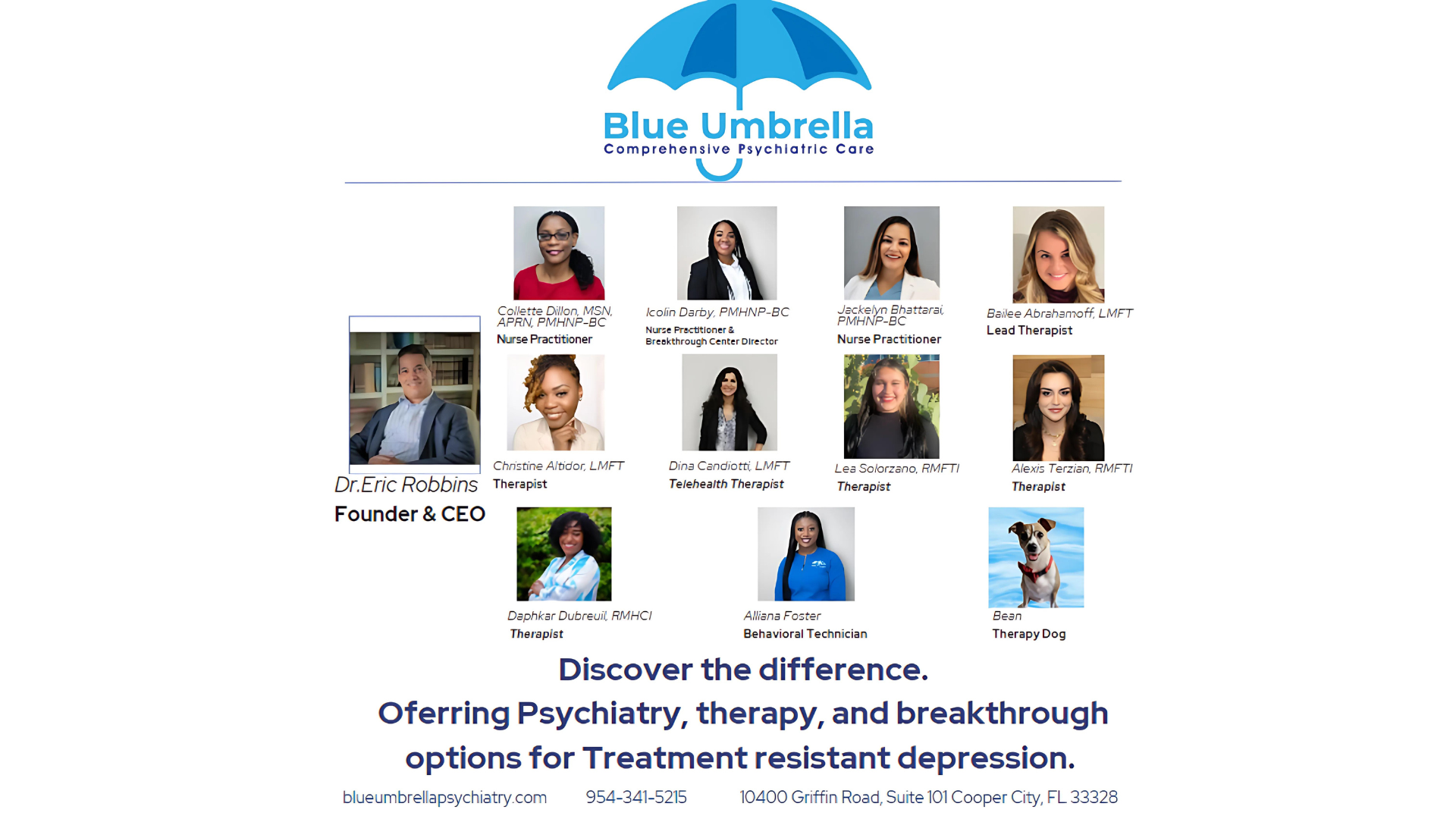
At Blue Umbrella Psychiatry, we believe in care that truly changes lives. Our CEO and lead psychiatrist, Dr. Eric Robbins, works closely with a dedicated team of Psychiatric Mental Health Nurse Practitioners (PHMNPs) who not only provide expert medication management but also incorporate a therapeutic approach to treatment. We believe that medication is only one part of the equation, and understanding your unique situation is key to finding the right path forward.


Comprehensive Mental Health Care Under One Roof


Unlike some offices that focus solely on prescribing medication, we take a holistic approach to mental health. Alongside our medication management services, we have a compassionate, in-house team of therapists who can address the broader spectrum of your mental health needs. Whether you’re looking for therapy, medication, or both, our integrated team works together to ensure you receive well-rounded care.


We also have the Breakthrough Center, where we offer additional options for treatment-resistant depression, including innovative therapies like ketamine, Spravato, and Transcranial Magnetic Stimulation (TMS). This allows us to provide specialized care for those who may not have found relief through traditional treatments.


Additionally, we serve the whole family starting at age 5, thanks to Dr. Robbins' certification as a child and adolescent board-certified psychiatrist. We understand the importance of addressing mental health concerns across different stages of life.


Even if you’re not coming to us for therapy, we’ve built strong partnerships with therapists in the community. This means we work closely with your existing therapist or help connect you with the right professional, so that all aspects of your mental health are well-coordinated and managed. At Blue Umbrella Psychiatry, we believe that collaboration with community therapists creates a network of care that provides the best outcomes for our patients.


A Team That Understands You


We know it can be intimidating to reach out to a psychiatrist. That’s why we focus on creating a welcoming, non-judgmental environment where your voice is heard. Our PHMNPs and therapists are not only highly skilled professionals but also compassionate listeners who work alongside you in your journey toward better mental health.


We understand that every individual’s path is different, and we’re here to walk that path with you, offering guidance, support, and evidence-based treatments tailored to your needs. Whether you’re struggling with daily stress or dealing with long-standing mental health challenges, Blue Umbrella Psychiatry is here to help you build a brighter, healthier future.


It’s Time to Take the Next Step


It’s normal to feel apprehensive about seeking psychiatric care, but at Blue Umbrella Psychiatry, you’re in good hands. Our collaborative approach, led by Dr. Robbins and supported by our talented team of PHMNPs and therapists, ensures you’ll receive the best possible care in a comfortable, supportive environment.


If you’ve been hesitating to reach out, know that we’re here for you every step of the way. Contact us today at 954-341-5215 to schedule a consultation and experience mental health care that changes lives.


June 11, 2026
Summer is often seen as a time for rest, travel, and freedom from routine. But for many people, it can actually increase anxiety instead of reducing it. Changes in structure, added social pressure, and lifestyle disruptions can make symptoms feel more noticeable during this season. Why Summer Can Feel More Stressful Without the structure of school or a regular work routine, daily life can feel less predictable. While some enjoy this flexibility, others experience increased mental strain when routines disappear. Common contributors to summer anxiety include: Disrupted sleep and daily routines Pressure to attend social events or “make the most” of summer Financial stress from travel, childcare, or activities Increased social comparison on social media Less structure leading to overthinking or restlessness Body image concerns during warmer-weather activities When structure decreases, anxious thoughts often have more space to grow. The Pressure of “Perfect Summer” Expectations Summer is often portrayed as a time of constant fun and productivity. This can create pressure to feel happy all the time, even when someone is struggling internally. This may lead to: Guilt about not feeling relaxed or excited Overcommitting to social plans Comparing personal experiences to others online Feeling behind on enjoyment or “making the most” of summer Instead of relief, this pressure can add emotional strain. Physical Factors That Can Worsen Anxiety: Heat, poor sleep, and changes in routine can also impact mood and anxiety levels. Physical discomfort often makes emotional regulation more difficult. Common triggers include: Sleep disruption from heat or travel Dehydration or fatigue Overstimulation from crowded or busy environments How to Manage Summer Anxiety: Creating a gentle structure can help reduce anxiety while still enjoying the season. Helpful strategies include: Keeping a consistent sleep schedule Balancing social plans with rest Limiting social media comparison Staying hydrated and active Using grounding or relaxation techniques Small routines can create stability without taking away summer flexibility. Take Action If summer is increasing your anxiety instead of relieving it, support can help. Blue Umbrella
June 4, 2026
Men’s Mental Health Awareness Month – June 💙
May 27, 2026
Why Mental Health Matters for Young People
May 20, 2026
Why Movement Matters
May 13, 2026
Understanding Teen Stress
May 7, 2026
Why Mental Health Awareness Matters Mental Health Awareness Month is a time to focus on emotional wellbeing, reduce stigma, and encourage people to seek support. Mental health is just as important as physical health. It affects how we think, feel, and handle daily life. When stress, anxiety, or depression go unaddressed, they can impact sleep, relationships, concentration, and even physical health.
April 30, 2026
Sleep is one of the most important foundations of mental health. Quality rest affects mood, focus, and resilience. As spring brings longer daylight hours and daylight savings, maintaining good sleep habits is essential for emotional wellbeing.
April 23, 2026
Spending time in nature is more than relaxing , it actively supports mental health. Earth Day on April 22 reminds us that connecting with the outdoors improves mood, focus, and emotional resilience.
April 16, 2026
Stress is a normal part of life, but when it becomes constant or overwhelming, it can affect mood, sleep, and overall health. April is Stress Awareness Month, making it the perfect time to explore strategies to reduce tension and reset your mental health.
April 9, 2026
Spring is a great time to reset . With longer days, warmer weather, and a change in routines, many people notice subtle shifts in mood, energy, and focus. World Health Day on April 7 is a reminder that taking care of mental health is just as important as taking care of physical health.