The Psychiatric Side of Anxiety: What Medication Can (and Can’t) Do

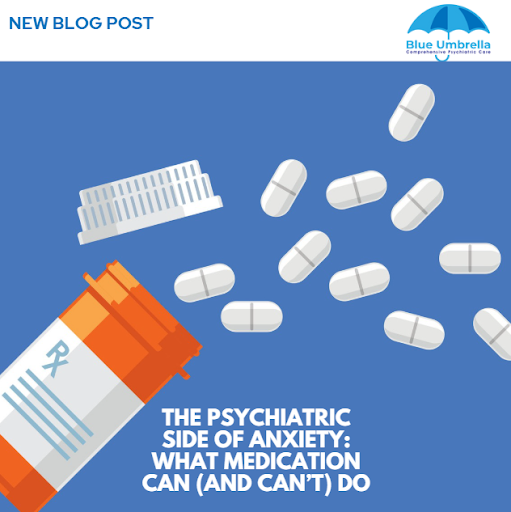
The Psychiatric Side of Anxiety: What Medication Can (and Can’t) Do


Anxiety disorders are among the most common mental health conditions treated in psychiatry. Whether you’re dealing with generalized anxiety, panic attacks, or social anxiety, understanding the role of medication can empower you to make informed decisions about your care.


At Blue Umbrella Psychiatry, we combine medical expertise with compassionate therapy to tailor treatments that best support each patient’s unique needs.

How Psychiatric Medications Help Anxiety


Medications can reduce symptoms by targeting brain chemistry involved in anxiety regulation. Common classes include:

  • Selective Serotonin Reuptake Inhibitors (SSRIs): Often first-line, they increase serotonin levels to improve mood and decrease worry. Examples: sertraline (Zoloft), fluoxetine (Prozac).

  • Serotonin-Norepinephrine Reuptake Inhibitors (SNRIs): Also effective for anxiety and depression. Examples: venlafaxine (Effexor), duloxetine (Cymbalta).

  • Benzodiazepines: Fast-acting medications that relieve acute anxiety and panic but are recommended only for short-term use due to dependency risk.

  • Buspirone: A non-benzodiazepine option for generalized anxiety with fewer sedative effects.

  • Other options: Sometimes other medications like beta-blockers or certain anticonvulsants are used off-label to manage symptoms.

What Medication Can Do


  • Reduce persistent worry, panic attacks, and physical symptoms like racing heart or muscle tension.

  • Improve sleep disrupted by anxiety.

  • Support patients so they can engage more fully in therapy and daily life.


What Medication Can’t Do Alone


  • Medication does not “fix” anxiety instantly — it is most effective combined with therapy and lifestyle changes.

  • It doesn’t address underlying thought patterns or coping skills.

  • Some side effects may occur and should be monitored closely.


Personalized Medication with GeneSight Testing


At Blue Umbrella Psychiatry, we offer GeneSight testing — a genetic test that helps predict how your body might respond to different psychiatric medications. This tool guides us in selecting medications that are more likely to be effective with fewer side effects, making your treatment journey more efficient and tailored to you.


Our Approach at Blue Umbrella Psychiatry


We conduct thorough evaluations to select the safest, most effective medication tailored to your diagnosis and history. Our psychiatrists work closely with therapists to provide integrated care.


If medication is prescribed, we monitor progress and side effects, adjusting treatment as needed to optimize outcomes.


When to Consider Medication


Medication may be recommended when anxiety:


  • Is severe or persistent and interferes with daily functioning

  • Does not improve adequately with therapy alone

  • Co-occurs with depression or other psychiatric conditions


We’re Here to Help


If anxiety is impacting your life, don’t hesitate to reach out. At Blue Umbrella Psychiatry, we offer personalized psychiatric care, therapy, and advanced tools like GeneSight to 


📍 New office location:
6100 Griffin Rd., 2nd Floor, Davie, FL 33314


📞 Contact us today to schedule a consultation.



February 18, 2026
Most of us have had a rough night of sleep and felt the effects the next day—irritable, foggy, unfocused, or emotionally sensitive. But when sleep problems become ongoing, they can affect much more than just energy levels. There’s a strong, two-way relationship between sleep and mental health, and understanding that connection is an important step toward feeling better. At Blue Umbrella Psychiatry, we often see how closely sleep and emotional well-being are intertwined. Let’s take a closer look at why sleep matters so much for mental health—and what to do when it’s not going well.
February 11, 2026
What to Expect When Starting an Antidepressant 
February 5, 2026
Why Talking to Others Is Good for Your Mental Health (Even When It Feels Hard)
January 29, 2026
How Small Wins Build Confidence and Resilience
January 22, 2026
As the new year begins, many people resolve to improve physical health, but emotional and mental well-being is just as crucial. Stress, anxiety, and overwhelming responsibilities can accumulate, making it difficult to focus, sleep, or feel at ease. Mindfulness and coping strategies are evidence-based tools that can improve emotional regulation, resilience, and overall quality of life.
January 15, 2026
Anxiety is one of the most common mental health challenges in adolescence. According to the Anxiety & Depression Association of America, nearly 1 in 3 adolescents experiences an anxiety disorder at some point, often leading to avoidance behaviors. Avoidance may provide temporary relief but can reinforce fears and limit personal growth.
January 8, 2026
Adolescence is a critical time for social development. Teens are learning to navigate friendships, school environments, and extracurricular activities, all while managing the emotional changes of growing up. Many teens experience anxiety, social discomfort, or avoidance behaviors that can impact their ability to engage with peers confidently.  Blue Umbrella Psychiatry is excited to introduce the Vibe & Thrive Teen Social Skills Group, designed for teens aged 13–17 to practice social skills, reduce anxious thoughts, and build confidence in a safe and supportive environment.
January 1, 2026
As we step into a new year, it’s natural to reflect on what we’ve achieved and what we hope to accomplish in the months ahead. While physical health goals often take center stage, mental health is equally important. Prioritizing emotional wellness, resilience, and personal growth can set the tone for a fulfilling 2026.
December 25, 2025
On this Christmas Day, we want to take a moment to thank our patients for letting Blue Umbrella Psychiatry be a part of your mental health journey in 2025. Your trust in us means the world, and we’re especially grateful to those who referred family and friends, joined our therapy groups, and moved with us to our new location. You make our community stronger, and we truly appreciate every one of you.  The end of the year is a great time to pause, reflect, and celebrate the progress you’ve made—even small steps matter. Whether it was attending sessions regularly, trying new coping strategies, or supporting a loved one’s mental health, your commitment deserves recognition.
December 18, 2025
The holiday season can be joyful, but it can also bring stress, irregular routines, and emotional challenges. At Blue Umbrella Psychiatry, we understand how the holidays affect mental health, and we’re here to offer practical strategies to help you maintain balance, manage stress, and enjoy the season.